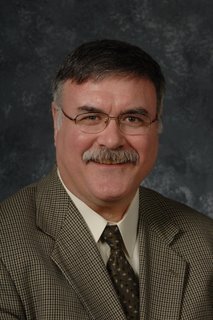
Steven Mosher paints a horrifying picture of the grim reality of the "One Child" policy in China. As a U.S. State Department representative in Guangdong Province in 1980, Mosher witnessed first-hand the forced abortions of women who committed the "crime" of becoming pregnant for the second time.
Since then, Mosher has become president of the Population Research Institute, a pro-life educational organization "dedicated to protecting and defending human life, ending human rights abuses committed in the name of family planning, and dispelling the myth of overpopulation." PRI has documented the thousands of forced late-term abortions and millions of coerced sterilizations in China, with important implications for targeted population control measures in other developing countries.
According to Mosher, "Population control encourages domestic tyranny of a very personal and deadly sort." This is what happens when alarmist views of overpopulation are somehow translated into public policies that view people as pestilence. Rather than focus on the root issues of poverty through education and economic development, coercive population control measures seek to cure the "disease" by killing the patient.
Human Life Review Article
YouTube Video
Showing posts with label ethics. Show all posts
Showing posts with label ethics. Show all posts
Wednesday, July 18, 2007


Thursday, July 05, 2007
Making Moral Decisions in Medicine
Our guest blogger this week is Matt Tabbut, a second-year med student (and Cedarville alumnus) at Chicago's Rosalind Franklin University.
At this stage of my medical education, I have begun to look at some practical ethics case studies. There are a few beacons, or waypoints, that I use to help guide me in making decisions. Consider the following.
1. Faith - As a Christian, my faith plays a vital role in moral living. This worldview based on Biblical principles and mandates serves as an anchor or foundation upon which to make ethical determinations. At the heart of Scripture is the concept of loving God and loving others. Thus, the Bible establishes immutable, transcendent, and absolute principles that serve as the ultimate authority in my moral and ethical dealings.
2. Reason - Reason is at the heart of all philosophical thought. However, reason alone (i.e. not tempered by a foundation based on principles - see point 1) is a slippery slope leading to consequences that we may not perceive or be willing to accept. But in my moral deliberations, I should not only be able to provide supporting arguments from faith, but should also be able to communicate arguments from reason that can be accepted more universally.
3. Precedent – A good argument can often be made from analogy, and history can help to clarify ethical dilemmas. Finding correlations with other related situations may shed light on the current problem.
4. Instinct - At least in the negative sense, this is sometimes called the "yuk factor," - another way of describing our gut reaction. Though decisions cannot be made solely on feeling, our gut reaction can give insight as we look other well-founded arguments.
At this stage of my medical education, I have begun to look at some practical ethics case studies. There are a few beacons, or waypoints, that I use to help guide me in making decisions. Consider the following.
1. Faith - As a Christian, my faith plays a vital role in moral living. This worldview based on Biblical principles and mandates serves as an anchor or foundation upon which to make ethical determinations. At the heart of Scripture is the concept of loving God and loving others. Thus, the Bible establishes immutable, transcendent, and absolute principles that serve as the ultimate authority in my moral and ethical dealings.
2. Reason - Reason is at the heart of all philosophical thought. However, reason alone (i.e. not tempered by a foundation based on principles - see point 1) is a slippery slope leading to consequences that we may not perceive or be willing to accept. But in my moral deliberations, I should not only be able to provide supporting arguments from faith, but should also be able to communicate arguments from reason that can be accepted more universally.
3. Precedent – A good argument can often be made from analogy, and history can help to clarify ethical dilemmas. Finding correlations with other related situations may shed light on the current problem.
4. Instinct - At least in the negative sense, this is sometimes called the "yuk factor," - another way of describing our gut reaction. Though decisions cannot be made solely on feeling, our gut reaction can give insight as we look other well-founded arguments.
Thursday, June 28, 2007
The Pursuit of 'Happyness'
Actor Will Smith received a Best Actor nomination in 2006 for his role as Chris Gardner, a stuggling single father of a five year-old boy. "The Pursuit of Happyness" was inspired by a true story, and is a moving portrayal of courage, tenacity, and street smarts, as the hero tries to make it as an unpaid intern in a San Francisco brokerage firm. At times homeless, at times lying to make a sale, his career finally takes off, and he eventually makes his fortune on Wall Street.
I enjoyed the movie, but it also bothered me a bit. At the very end, I found myself wondering, "Is that it?" Is money the secret of 'happyness?' The film seemed to be saying that material wealth is the goal we should all strive for.
Aristotle taught that moral virtue was the real secret of happiness, and the most important thing to aim for in life. It is also an unlimited good - in other words, you can never have it in excess. Contrast this with Aristotle's view of wealth, as a means to a more noble end, but never an end in itself.
For more, see Mortimer Adler: Aristotle for Everybody
I enjoyed the movie, but it also bothered me a bit. At the very end, I found myself wondering, "Is that it?" Is money the secret of 'happyness?' The film seemed to be saying that material wealth is the goal we should all strive for.
Aristotle taught that moral virtue was the real secret of happiness, and the most important thing to aim for in life. It is also an unlimited good - in other words, you can never have it in excess. Contrast this with Aristotle's view of wealth, as a means to a more noble end, but never an end in itself.
For more, see Mortimer Adler: Aristotle for Everybody
Tuesday, June 19, 2007
Dr. Death is on the Loose
On June 1st, Jack Kevorkian was released from prison, after serving eight years of a longer sentence for second-dgree murder. A participant in at least 130 assisted suicides during the 1990s, he is still unrepentant.
Constrained by conditions of his parole, he can speak publicly about laws to allow doctors to assist in suicide, but he cannot counsel individuals. “You see, I’m still in prison,” he said. “I’m on a tether. I’m on a virtual tether. If you don’t behave, you go back to prison.”
It is interesting to note that the former pathologist has received some sympathy for his views. As a tribute to the public ambiguity about assisted suicide, the original Michigan jury that convicted him could not agree on a capital murder charge.
Think of it -- this was not a case of suicide, for it was Kevorkian who actually injected the lethal medicine that took the life of this particular patient, with the video cameras rolling. And what could be more premeditated than such an act, planned many days in advance, with calls to the press and TV stations?
Yet the jury could not agree on capital murder (murder in the first degree), which could have resulted in a life sentence. Instead, in defiance of logic, they convicted him of second-degree murder, as though this was a spontaneous act of passion.
So Dr. Death is free on parole, with his time shortened for "good" behavior.
New York Times Article
Constrained by conditions of his parole, he can speak publicly about laws to allow doctors to assist in suicide, but he cannot counsel individuals. “You see, I’m still in prison,” he said. “I’m on a tether. I’m on a virtual tether. If you don’t behave, you go back to prison.”
It is interesting to note that the former pathologist has received some sympathy for his views. As a tribute to the public ambiguity about assisted suicide, the original Michigan jury that convicted him could not agree on a capital murder charge.
Think of it -- this was not a case of suicide, for it was Kevorkian who actually injected the lethal medicine that took the life of this particular patient, with the video cameras rolling. And what could be more premeditated than such an act, planned many days in advance, with calls to the press and TV stations?
Yet the jury could not agree on capital murder (murder in the first degree), which could have resulted in a life sentence. Instead, in defiance of logic, they convicted him of second-degree murder, as though this was a spontaneous act of passion.
So Dr. Death is free on parole, with his time shortened for "good" behavior.
New York Times Article
Tuesday, April 24, 2007
More on the Supreme Court's Ruling

On April 19th, the U.S. Supreme Court reached a landmark decision. In a 5-4 decision, the Court upheld the 2003 Partial Birth Abortion Ban Act as constitutional. There is much to rejoice about, yet much remains to be done.
The Court has struck a balance between a woman's right to choose to terminate her pregnancy and the "legitimate and substantial" federal interest to preserve fetal life. This balance was at the heart of the Planned Parenthood v. Casey decision of 1992.
Last week's decision is narrowly crafted to line up with Casey, and in no way signals an overturning of Roe v. Wade (1973). On the other hand, it signals a willingness on the part of the Court to consider federal restrictions on abortion for purely moral reasons. The fact that one option for terminating a pregnancy is no longer available does not significantly interfere with women's rights.
Both sides of the issue agree that this recent ruling will encourage states to craft more restrictions on abortion.
For more analysis, read the commentary by Wesley J. Smith.
Wednesday, April 18, 2007
Breaking News: Partial-Birth Abortion Ban Upheld
By a narrow 5-4 decision, the U.S. Supreme Court today upheld a federal law banning the late-term abortion procedure called 'intact dilation and extraction,' better-known by the label 'partial-birth abortion.' This is a major victory for the pro-life cause.
Partial-birth abortion (as we have discussed in an earlier post), has been called by one author "constitutionally sanctioned homicide." Praise the Lord it is no longer sanctioned by law, nor by our courts!
This exciting news is an answer to prayer.
Boston Globe Article
Partial-birth abortion (as we have discussed in an earlier post), has been called by one author "constitutionally sanctioned homicide." Praise the Lord it is no longer sanctioned by law, nor by our courts!
This exciting news is an answer to prayer.
Boston Globe Article
Sunday, April 15, 2007
Whither Human Dignity?
As anyone who hasn't been living on the planet Mars recently must surely know, there was a big furor last week over remarks by veteran broadcaster Don Imus. His injudicious use of racist and sexist remarks about the Rutgers University Women's Basketball team got him fired from his job. His show, "Imus in the Morning," had been carried on 61 stations and generated $20 million in revenues for CBS last year.
Though I won't repeat Imus' remarks here, it is clear why they generated so much reaction. Anytime a person is negatively labeled because of gender or race, this affronts our shared human dignity. And we should be especially careful here, for this has not always been such an obvious evil. It took the civil rights and women's rights movements to raise our awareness, and the work is not yet finished.
Do we as a culture have other blind spots? I think we do. There is another assault on human dignity at work in our midst, only this one based on geography. A whole class of persons has only provisional rights, all because of where they live. Furthermore, the cost of this affrontery is far greater than the indignities suffered by the Rutgers women. For this group, being second-class citizens threatens their very lives.
I am, of course, referring to the unborn. Why are we so quick to recognize prejudice when we hear it in the voice of a cynical sportscaster, but ignore the taking of life through abortion? In fact, we don't even notice, let alone become outraged.
Just wondering.
CNN News Story
Though I won't repeat Imus' remarks here, it is clear why they generated so much reaction. Anytime a person is negatively labeled because of gender or race, this affronts our shared human dignity. And we should be especially careful here, for this has not always been such an obvious evil. It took the civil rights and women's rights movements to raise our awareness, and the work is not yet finished.
Do we as a culture have other blind spots? I think we do. There is another assault on human dignity at work in our midst, only this one based on geography. A whole class of persons has only provisional rights, all because of where they live. Furthermore, the cost of this affrontery is far greater than the indignities suffered by the Rutgers women. For this group, being second-class citizens threatens their very lives.
I am, of course, referring to the unborn. Why are we so quick to recognize prejudice when we hear it in the voice of a cynical sportscaster, but ignore the taking of life through abortion? In fact, we don't even notice, let alone become outraged.
Just wondering.
CNN News Story
Sunday, March 25, 2007
A Pearl on Stem Cell Research

Since the bioethics news has been so serious lately, I thought we should take a break this week, and just enjoy my favorite (slightly warped) comic strip, Pearls Before Swine. This one is about stem cell research (just left click to enlarge).
I promise to return to my usual commentary next week!
I promise to return to my usual commentary next week!
Pearls Before Swine Web Site
Tuesday, March 13, 2007
Aborting the Less-Than-Perfect
During early fetal development, sometimes the esophagus fails to develop normally, a condition known as esophageal atresia. This happens once in about 3500 pregnancies, and doctors can frequently diagnose this condition by ultrasound prior to birth.
Except that sometimes the doctors are wrong.
In a teaching hospital in Florence, Italy, a woman had an abortion 22 weeks into her pregnancy. She chose this course after two separate ultrasound exams failed to detect the stomach, which the physicians interpreted as evidence for esophageal atresia. After the abortion, the baby was born alive, and doctors realized that he was perfectly normal. Weighting just 500 grams, the baby is now fighting for life in a pediatric intensive care unit. Due to a brain hemorrhage from the attempted abortion, the child is not expected to survive.
Dr. Joe DeCook, a pro-life colleague of mine, put it this way:
Except that sometimes the doctors are wrong.
In a teaching hospital in Florence, Italy, a woman had an abortion 22 weeks into her pregnancy. She chose this course after two separate ultrasound exams failed to detect the stomach, which the physicians interpreted as evidence for esophageal atresia. After the abortion, the baby was born alive, and doctors realized that he was perfectly normal. Weighting just 500 grams, the baby is now fighting for life in a pediatric intensive care unit. Due to a brain hemorrhage from the attempted abortion, the child is not expected to survive.
Dr. Joe DeCook, a pro-life colleague of mine, put it this way:
Doctors should be really careful when they assume God-like wisdom, and intrude into the realm of suggesting preemptive death as a treatment.
Granted, the hospital claims that their doctors advised the woman to seek further diagnostic tests, and she chose additional input from a private clinic. Yet the physicians should have told her two things:
- An ultrasound test can sometimes be misleading (as it was in this case)
- Even if present, a malformed esophgus can be surgically repaired, with a high likelihood of a normal life afterward.
Given the circumstances, the Vatican newspaper said that the child's life had been "thrown away."
Daily Telegraph article
Tuesday, February 06, 2007
Postmodernity Redux
On February 1st, Bill O'Reilly (on Fox News) interviewed actress and now radio talk-show host Whoopi Goldberg about her views on the war in Iraq. O'Reilly commented on Whoopi's influence, which is considerable, then asked her if she knew what she was talking about. In other words, it was a matter of credibility. Along the way, O'Reilly pointed out that he had based his conclusions on a careful examination of the facts. Here, in part, is Whoopi's response:
Story from "The O'Reilly Factor"
[W]hen I take a stance on something, all I can talk to you about is how I feel about it and why. And I don't have to justify it . . . And you want to go and get lots of facts and not go from your heart. I go from my heart.There you have it - a candid admission from the political Left: "My position is based on a feeling." Facts are unimportant, and we can determine our own reality. This subtle denial of any absolute standard of truth is at the heart of the way some people in our society justify their ethical ideas. There's no right or wrong - just opinions.
Story from "The O'Reilly Factor"
Subscribe to:
Posts (Atom)
 Subscribe in a Reader


